

I love books about Apple. I think I’ve read all the significant ones, dozens of them. And people are still writing new ones, because there are an infinite number of stories left to tell. When I first heard that David Pogue was writing a book called Apple: the First 50 Years, I was excited. Pogue seemed like the perfect author to tell the story of the entire history of Apple. He has a stellar résumé as a tech journalist and author. But also important is that David is one of us: an Apple fan. Not a sycophant, not incapable of needling Apple as necessary, but he gets Apple people and products and the Apple universe. So this book had a real chance to be great.
As a writer and Apple fan myself, I couldn’t help feeling a bit of FOMO. What a cool project to work on! Especially when I learned that David was on a mission to correct the record and find the true versions of so many oft-told tales of Apple. What really happened when Steve Jobs left the company? How did Apple actually start? Was there really going to be an Apple car? Finding out all that stuff sounded fun but more like a journalist’s mission – fitting for someone with David Pogue’s experience, less so for a technical writer like me. So my envy calmed down a little.
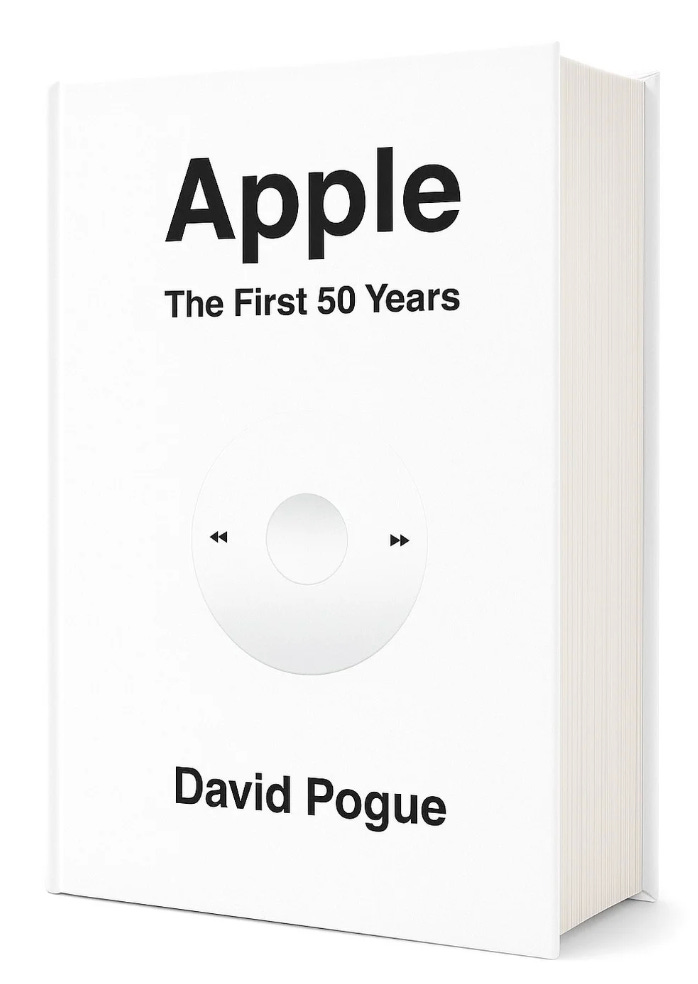
Late in 2025, David posted on Facebook asking for volunteers to read a chapter or two of his manuscript to look for errors. Of course I wanted to do that! I immediately raised my hand and said I would be more than happy to help. So he sent me (and many others) a couple of draft chapters. I read them eagerly and found some things that needed fixing, which I reported to David. We were both surprised at the errors, as the manuscript had already gone through several passes of editing and proofreading. But as every writer knows, misteaks have a sneaky way of getting into writing and evading detection.
Because I found stuff, David asked if I would look at more chapters. I said I would. And I found more stuff. I was glued to this book. I read it intently, and with fresh eyes, and it’s a long book, so I kept finding things. Eventually David asked if I wanted to read the whole thing. Hah! Of course I did! As the process moved along, David expressed his gratitude for my time and effort. Honestly, I told him, it was my pleasure. A labor of love. As I explained to David, if this book were published and I read it and found mistakes, I would feel bad that an important work about my favorite company was flawed.


The book came out in March 2026, huge (608 pages) and hugely successful (multiple weeks on the New York Times Best Sellers list). When the book was published, I did my usual thing and bought the audiobook. That’s how I consume most of my books. And then I spent several weeks listening to it, because when I listen to an audiobook, I focus on it fully, so it takes me a while. The audiobook is just short of 24 hours long. Maybe David should have read a little more slowly, so that it precisely filled a full day. Or he could have added a reading of the 700 Hobo Names or something.
To reiterate: David Pogue reads the audiobook. Actually, he performs it. Listening to the audiobook is a completely different experience from reading it in print. Pogue is a pro at this. If you’ve ever seen him speak at an event or watched him on CBS Sunday Morning or Nova, you know that. The audiobook is a double scoop of Pogue, his book plus his performance. And there are many, many bits of actual audio, such as snippets from keynotes and TV ads, that energize the book even further. I don’t think I’ve heard an audiobook with so much “bonus” audio stuff. There’s even an Easter egg!
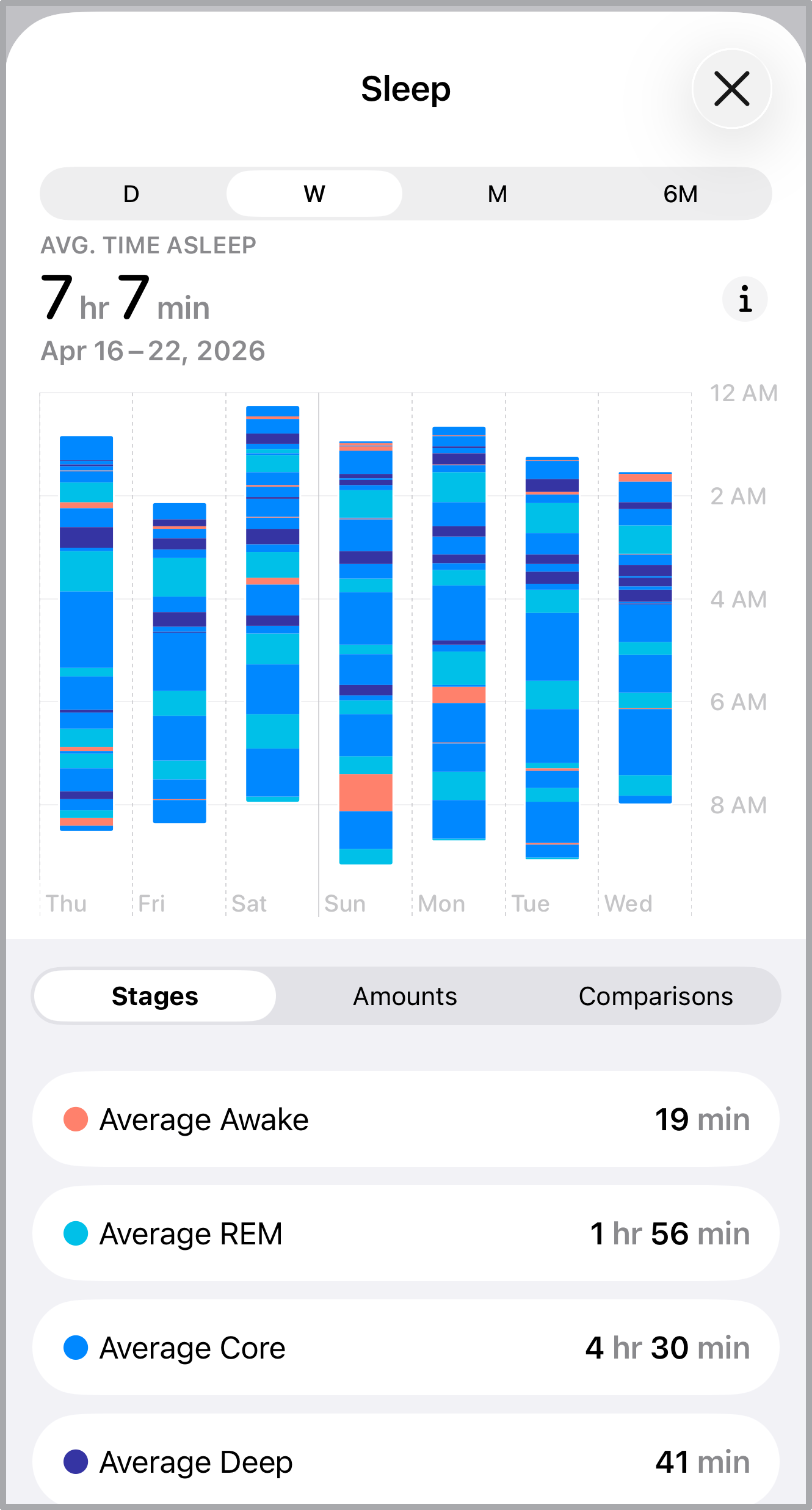
If you’re like me and you have fond Apple memories, hearing historic audio gets your emotions flowing. Like bits from the original Mac intro, the iPhone announcement, and the one that really broke me: the never-aired Steve Jobs-narrated version of the “Crazy Ones” ad. Especially because I just happened to be driving past Apple Park when that part came on. You can tell that David understands the Apple experience just in his written words. But the full feeling really comes through when you hear him reading what he wrote.
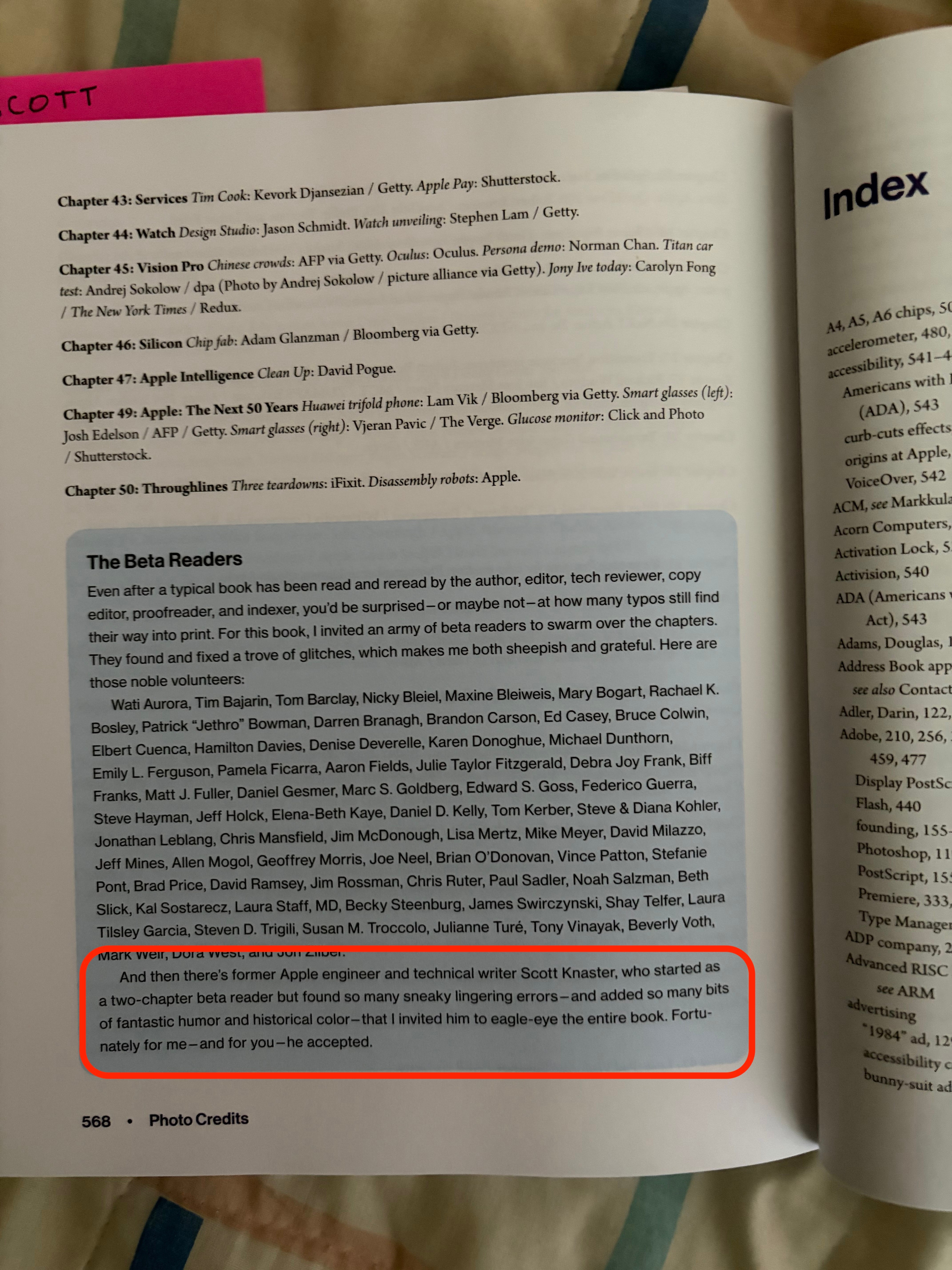
In the end, I’m thrilled I got to pitch in a little on this important work. Listening to the audiobook was moving and memorable. And in the print book, David graciously acknowledged my help. It’s literally the last thing in the book before the index — the perfect location for me, because adjacent to greatness is my jam.
By the way, I found a couple of errors in the audiobook. I guess I’m just blessed / cursed with that ability. Even though there might be an error or two left in the book, as there are in all books, I give Apple: the First 50 Years my highest recommendation. Especially the audiobook.
“David Pogue is not a sycophant.”
I had to look up the word ‘sycophant’, and went to wiktionary.org to seek out the etymology.
Turns out the word in greek is of made up of the two words ‘fig’ and ‘to show’, and the story behind goes as follows:
“The gesture of "showing the fig" was a vulgar one, which was made by sticking the thumb between two fingers, a display which vaguely resembles a fig, which is itself symbolic of a σῦκον (sûkon), which also meant vulva. The story behind this etymology is that politicians in ancient Greece steered clear of displaying that vulgar gesture, but secretly urged their followers to taunt their opponents by using it.”
No, you’re right, Scott, David Pogue is not a sycophant, he’s merely “showing the apple”.
Oh my! What a tease! Since you're not going to disclose the audiobook errors, the speculation runs wild. My money is on, after listening for nearly 24 hours, one learns that Pogue mispronounced Knaster. I hope you'll bury the truth in a time capsule to be opened in 100 years. I'll never know if you did, but if you say you did, I'll believe you.